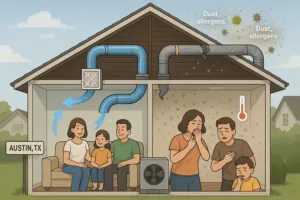



Your HVAC system quietly affects your monthly expenses more than you might realize. HVAC problems like dirty filters and inefficient operation force equipment to work harder, driving up energy costs. Most HVAC systems serve homes reliably for 15 to 25 years, but poor maintenance shortcuts their lifespan and leads to costly repairs.
Money-draining HVAC issues need quick attention – from water damage caused by clogged drains to cooling losses from refrigerant leaks. Our team sees these problems daily and knows exactly how they impact homeowners’ budgets. This practical guide shows you how to spot expensive HVAC issues early and take smart steps to protect your system.
Key Topics Covered:
- Major HVAC repairs and prevention strategies
- System inefficiencies that increase operating costs
- Problem indicators that signal developing issues
- Cost-effective maintenance approaches
Most Expensive HVAC Problems to Fix
HVAC repairs rank among the most significant home maintenance expenses homeowners face. Smart decisions about repairs versus replacements start with understanding these costly issues.
Compressor Failure Costs
Failed compressors create serious headaches for homeowners. This vital component’s replacement hits wallets hard, costing between USD 1,350 to USD 2,300. The expense breaks down into several parts: USD 400 to USD 1,500 for the compressor unit, USD 700 to USD 1,000 for skilled labor, plus USD 250 to USD 500 for additional parts and refrigerant.
Heat Exchanger Replacement
Heat exchanger problems demand quick attention and substantial investment. Most homeowners pay around USD 1,500 for replacement, though costs stretch from USD 500 to USD 3,500 based on unit quality and efficiency ratings. High-efficiency furnaces pose extra challenges – their secondary heat exchanger replacement alone runs USD 1,000 to USD 2,000.
Major Electrical System Repairs
Electrical system troubles spell complex repair work for HVAC units. Problems start with faulty wiring, overloaded circuits, or failing components. Your system’s electrical health depends on several key parts:
- Capacitors and relays managing motor function
- Circuit breakers and fuses preventing overload damage
- Thermostat connections ensuring temperature accuracy
- Wiring systems delivering power where needed
Expert electrical repair rates typically run USD 75 to USD 125 per hour. Emergency service calls outside regular hours can push costs to triple the standard rate.
Hidden Costs of Common HVAC Issues
Small HVAC maintenance gaps pack a surprising punch to your monthly budget. Your wallet feels these hidden costs long before major breakdowns occur.
Rising Energy Bills From Dirty Filters
Dirty filters start a chain reaction of costly problems in your HVAC system. Your energy bills tell the story – the U.S. Department of Energy reports dirty filters push energy usage up by 15%. Your system struggles against clogged filters, working overtime to push air through restricted spaces. Clean air simply can’t flow freely, forcing longer run times to reach desired temperatures.
Good news comes from ENERGY STAR® – regular filter care slashes air conditioning energy use by 5% to 15%. Fresh filters mean smooth airflow, happy equipment, and lower utility bills.
Impact of Refrigerant Leaks on Efficiency
Refrigerant leaks spell trouble for both comfort and costs. Low refrigerant levels force your system to run longer, burning extra energy to cool your home. These leaks create a perfect storm of problems:
- Skyrocketing monthly energy costs from extended operation
- Uncomfortable indoor temperatures despite constant cooling
- Serious compressor strain under low pressure
- Complete system breakdown risks
Department of Energy research reveals shocking numbers – duct issues waste up to 40% of HVAC heating and cooling energy. Refrigerant leaks threaten more than efficiency – they slowly destroy vital components like your compressor. Simply topping off refrigerant won’t solve the problem. Only proper leak repair stops the energy waste and protects your equipment.
Early Warning Signs That Save Money
Smart homeowners catch HVAC problems early, saving hundreds in repair costs. Your system gives clear signals before major issues develop. Our expert guide helps you spot these money-saving warning signs.
Strange Noises and Their Meanings
HVAC equipment tells you when something’s wrong through distinct sounds. Listen for squealing or screeching – these often mean your blower’s fan belt needs attention. Banging or clanking noises point to trouble in your blower assembly or motor. Pay special attention to high-pitched whistling sounds – these might indicate dangerous refrigerant pressure issues needing quick professional care.
Temperature Inconsistencies
Room-to-room temperature differences spell trouble for your HVAC system. Hot and cold spots throughout your home signal developing problems. Three main culprits create these temperature swings:
- Blocked or damaged ducts disrupting airflow
- Poor insulation in walls or ceilings
- Dirty filters blocking proper air movement
Unusual Odors to Watch For
Your nose knows when HVAC problems start. Musty odors usually mean unwanted mold growth inside system components. Burning smells warn you about electrical problems or struggling motors. Rotten egg or sulfur smells demand immediate expert help – these might signal dangerous gas leaks.
Quick action on these warning signs protects both your HVAC system and your wallet. Trust these signals – they help prevent small issues from becoming expensive emergencies.
Smart Prevention Strategies
Regular HVAC maintenance protects your investment and cuts long-term costs. Well-maintained equipment runs at peak efficiency, keeping energy bills low and preventing costly breakdowns.
Regular Maintenance Schedule
Your HVAC system needs professional attention twice yearly to stay healthy. Schedule cooling system checks each spring and heating system inspections every fall. This schedule keeps your equipment ready for peak seasons. Older units need extra care, especially in areas with harsh weather patterns.
Filter Replacement Timing
Clean filters keep your HVAC system breathing easy. Homes without pets need fresh filters every 90 days. Pet owners should replace filters every 60 days. Multiple pets or allergy concerns? Change filters every 20-45 days. Summer and winter months might call for more frequent changes.
Professional Inspection Benefits
Expert HVAC technicians perform thorough system checks. Quality inspections always include:
- Water coil cleaning and testing
- Temperature sensor calibration
- Electrical system safety checks
- Heat exchanger examination
- Refrigerant level verification
Professional maintenance cuts HVAC energy consumption by up to 30%. Regular expert care spots small issues before they grow into expensive problems, adding years to your system’s life. Trusted maintenance also means safer operation and fewer surprise breakdowns.
Conclusion
Knowledge about HVAC issues safeguards your valuable home equipment from costly damage. Regular maintenance pays for itself many times over through prevented repairs and extended system life. Expert technicians spot subtle problems early, keeping your system running at its best.
Proactive homeowners save money by responding quickly to system warnings. Your well-maintained HVAC equipment uses 30% less energy while delivering reliable comfort. Scheduled maintenance visits cost far less than emergency repairs or premature system replacement.
Texas Reliable Services keeps your HVAC system running smoothly with expert care and precision repairs. Our skilled technicians bring years of hands-on experience to every service call. Ready to protect your HVAC investment? Call us at (512) 609-8103 for professional maintenance that fits your budget.
FAQs
Q1. How can I reduce my HVAC energy costs? To lower your HVAC energy costs, regularly replace air filters, seal air leaks, use a programmable thermostat, and schedule professional maintenance twice a year. Clean filters alone can reduce your air conditioner’s energy use by 5% to 15%.
Q2. What are the most expensive HVAC repairs? The most costly HVAC repairs typically involve compressor failure, heat exchanger replacement, and major electrical system repairs. Compressor replacements can cost between $1,350 to $2,300, while heat exchanger replacements range from $500 to $3,500.
Q3. What warning signs indicate potential HVAC problems? Key warning signs include strange noises like squealing or banging, temperature inconsistencies throughout your home, and unusual odors such as musty or burning smells. These indicators often signal issues that require immediate attention to prevent more expensive repairs.
Q4. How often should I replace my HVAC air filters? For standard homes without pets, replace filters every 90 days. Homes with pets should change filters every 60 days, while households with multiple pets or allergies need replacements every 20-45 days. More frequent changes may be necessary during peak heating or cooling seasons.
Q5. What are the benefits of professional HVAC inspections? Professional HVAC inspections offer comprehensive system evaluations, including cleaning coils, calibrating sensors, checking electrical connections, and testing refrigerant levels. Regular professional maintenance can reduce HVAC energy consumption by up to 30% and extend equipment life by several years.